
Introduction
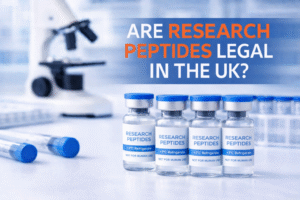
Research peptides are becoming increasingly popular in the UK, particularly within scientific and laboratory environments. However, one of the most common questions is:
Are research peptides legal in the UK?
Understanding the legal framework is essential for both suppliers and buyers to ensure compliance and safe use within appropriate settings.
Are Research Peptides Legal in the UK?
In the UK, research peptides can be legally sold and purchased, but only under specific conditions.
They must be:
- Supplied strictly for laboratory research purposes
- Clearly labelled as “not for human or veterinary use”
- Marketed for scientific and in vitro applications only
This is why reputable suppliers (like your brand) emphasise R&D use only across product pages and packaging.
When Do Peptides Become Illegal?
Peptides may become illegal if they are:
- Marketed for human consumption
- Promoted with medical or therapeutic claims
- Sold as supplements or medicines without MHRA approval
The Medicines and Healthcare products Regulatory Agency (MHRA) strictly regulates substances intended for medical use.
Any product claiming health benefits without proper licensing can fall under medicinal regulation, making it illegal to sell.
Why “Research Use Only” Matters
The phrase “research use only” is not just marketing — it’s a legal requirement.
It ensures:
- The product is used in controlled environments
- It is not misrepresented as a treatment or drug
- The supplier remains compliant with UK regulations
For example, compounds like NAD+, GHK-Cu, or peptide blends are widely studied, but not approved for human use unless clinically authorised.
Legal Responsibilities for Suppliers
If you are selling research peptides in the UK, you must ensure:
✔ Proper Labelling
- “For laboratory research use only”
- No dosage instructions for humans
✔ No Medical Claims
- Avoid words like:
- “treatment”
- “therapy”
- “fat loss”
- “muscle gain”
✔ Transparent Product Information
- Purity levels
- Batch details
- Storage guidelines
This is crucial for maintaining compliance and avoiding regulatory issues.
What About Buyers?
Buyers also have responsibility.
Research peptides should:
- Only be used in scientific or laboratory settings
- Not be used for self-administration
- Be handled according to research safety standards
How to Identify a Compliant Supplier
A legitimate UK peptide supplier will:
- Clearly state R&D / in vitro use only
- Provide lab-tested products
- Avoid exaggerated claims
- Display professional branding and documentation
Explore compliant products like:
- NAD+ research compounds
- Multi-peptide blends
- Laboratory-grade formulations available through trusted suppliers
Conclusion
Research peptides are legal in the UK when sold and used correctly within a scientific context.
The key takeaway:
Legality depends on how they are marketed and used, not just the compound itself.